
Introduction
On Saturday 9 September 1944, things were looking very grim for the Germans. In Bulgaria the Otechestven Front (Fatherland Front) overthrew Konstantin Muraviev’s government, shifting that nation away from the Axis powers. Along the East Prussian border, the Red Army made slow but steady advances into German territory, while in western France, four American Rangers captured the Batterie Graf Spee at Lochrist without firing a shot, taking an incredible 814 prisoners in the process (read this link for the full story). At sea, the German U-boat, U-484, was sunk in a depth charge attack north-west of Ireland during its maiden patrol. In every theatre the Germans were suffering defeat after defeat. It was no different in the skies over Europe, where the superior numbers, tactics and equipment of the American and British air forces thwarted an attempt by the fighter aircraft of II. Jagdkorps to help beleaguered German ground forces in the area of Liege.
Preparations
On the morning of 9 September, II. Jagdkorps reported that 373 Messerschmitt Bf 109s and Focke-Wulf 190s were operationally ready. These aircraft belonged to some very war-weary fighter units still recovering from their exertions over France during the summer. Heavy losses had been suffered, and morale was not particularly high amongst the airmen. Recent withdrawals from France to bases in Germany and Holland also meant there was a certain degree of disorganisation for the Gruppen subordinate to II. Jagdkorps. Adding to their problems was the severe lack of aviation fuel available, which severely restricted Luftwaffe operations at this point in the war.
Preparing for the day, the Korps issued standing orders that required two hour readiness for the pilots of JG 2, JG 26, JG 53 and JG 76. Meanwhile, JG 27 was to be at twenty-minute readiness from 07:30. Meanwhile, there was the projected transfer of the Bf 109-equipped JG 76 and I./JG 77. Any other operations were to be at the discretion of the Jagdkorps and were entirely dependent upon enemy operations, the weather, and, most importantly, the fuel situation.
Although the USAAF launched bomber raids over Germany, Belgium and the Netherlands, there was also what the Germans reported to be “lively fighter-bomber and reconnaissance activity … in the Belgian-Dutch area with attacks on road objectives.” For the crews of II. Jagdkorps, 9 September would be relatively quiet; the only operation ordered for the day being an evening attack in support of ground forces near Liege. That sector was held by the German 7. Armee, against troops of the American XIX Corps advancing rapidly towards the German border, and II. Jagdkorps reported that army command Heeresgruppe B emphasised the importance of the Luftwaffe carrying out an operation in the Huy-Liege area during the day.
II. Jagdkorps detailed 64 aircraft to the raid, and the operation was to be split into two formations that were to attack at 30 minute intervals. The first formation was to be made up of Fw 190s from I./JG 2 and Bf 109s from II./JG 2, based at Merzhausen and Nidda near Frankfurt am Main, while the second was to be flown by the Bf 109s of I./JG 11.
Operations
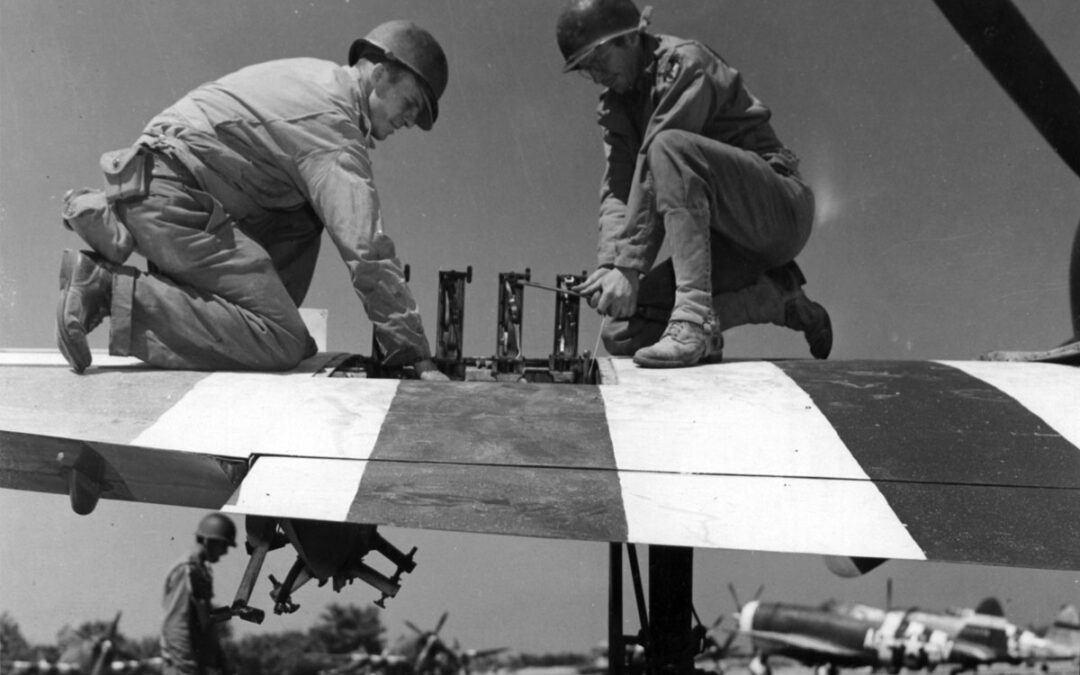
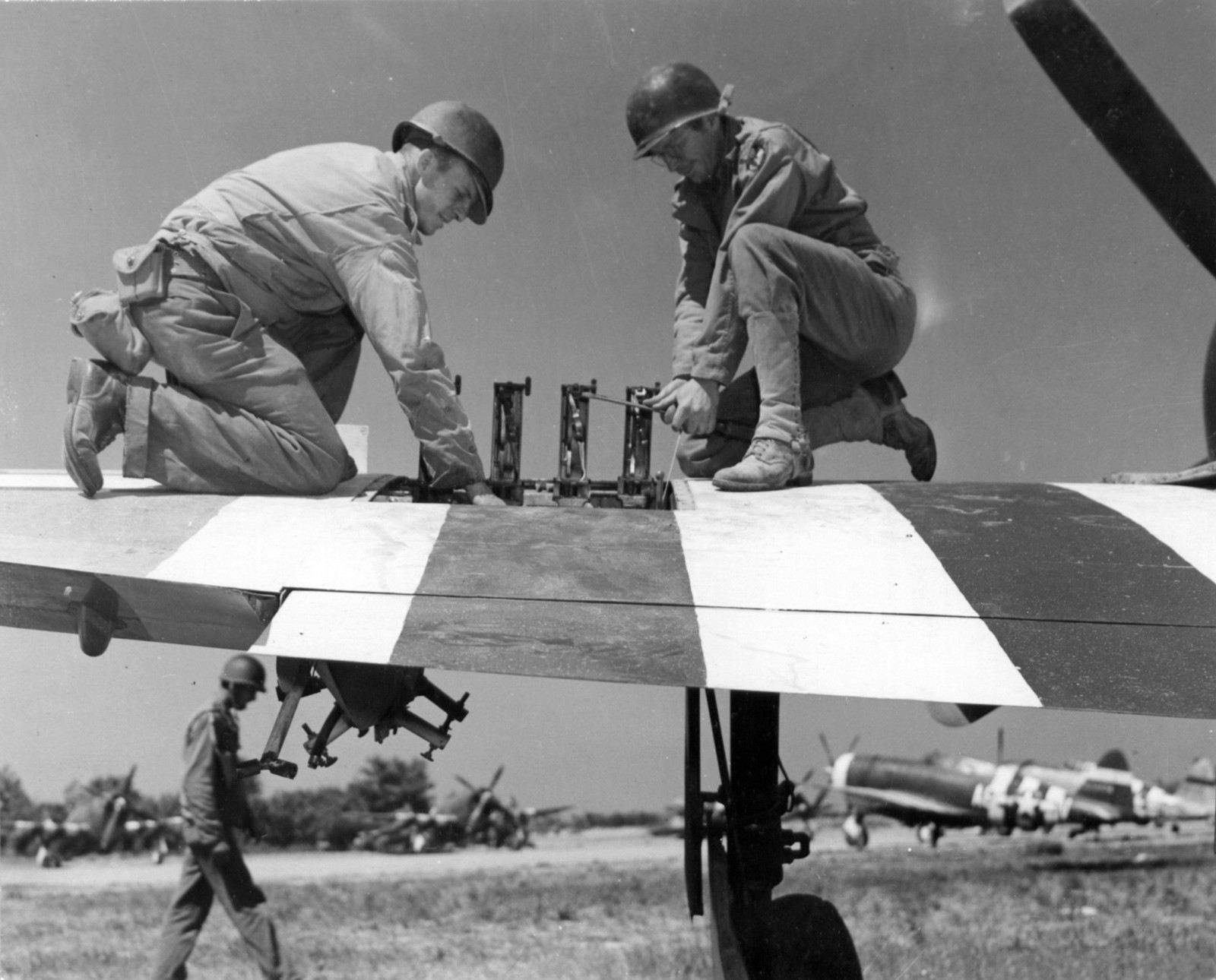
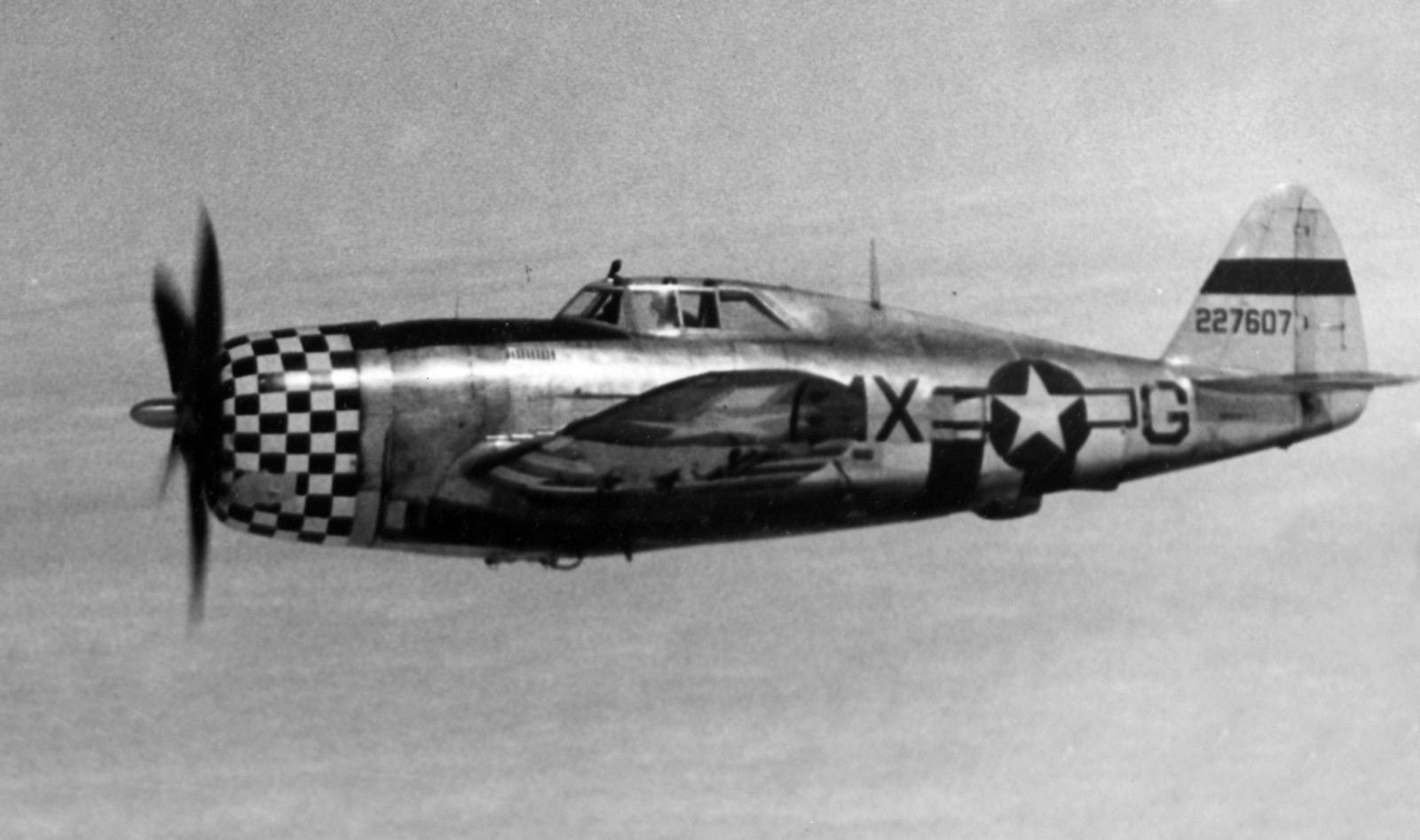
Having taken off from their bases on the evening of 9 September, the first wave of German fighters was bounced by P-47 Thunderbolts of the 82nd and 84th Fighter Squadrons, 78th Fighter Group. Outnumbered and at a lower altitude than the Thunderbolts, the German formation immediately became scattered and was forced to abandon its objective as each pilot fought a series of dogfights at low-level. In the ensuing combat, Major Erich Hohagen’s I./JG 2 reported that nine aircraft were shot down, with another destroyed after overturning while landing. In contrast, II./JG 2 was incredibly lucky to escape without suffering any losses during this engagement.
For their part, the Americans filed claims for the destruction of eight Fw 190s, with a further three damaged, in their combat between 17:25 and 18:00. In return, the surviving Luftwaffe pilots submitted claims for five Thunderbolts shot down, although this was later revised to four. The successful I./JG 2 pilots were Lt. Heinz Eichhoff (his eleventh victory), Uffz. Gottfried Klein (his second), Lt. Hans Eisen (his first), Uffz. Horst Görtz (his first), and Uffz. Gerhard Lück (his first). The low victory tallies for these pilots shows how little experience II. Jagdkorps could call upon in the autumn of 1944, after the bloodletting of the summer.
Another American P-47 unit involved in this combat was the 360th FS/356th FG, and eight-victory ace Major John W. Vogt recalled the loss of one of his men to an Fw 190 of I./JG 2:
“Shortly after this, Lt. [Harry ‘Fritz’] Rideout called to say his ship had been hit by 20mm fire from an Fw 190 and that he was attempting to get home in a crippled condition. He then said that he was being followed by two Fw 190s and that he was not able to out run them. I got his heading and approximate location which I thought was near Koblenz and flew there to intercept him. We were able to maintain radio contact with him until about three minutes after he reported crossing the Rhine River, at which time he said the two enemy aircraft were preparing to attack again. We were unable to locate him and received no further message from him.“
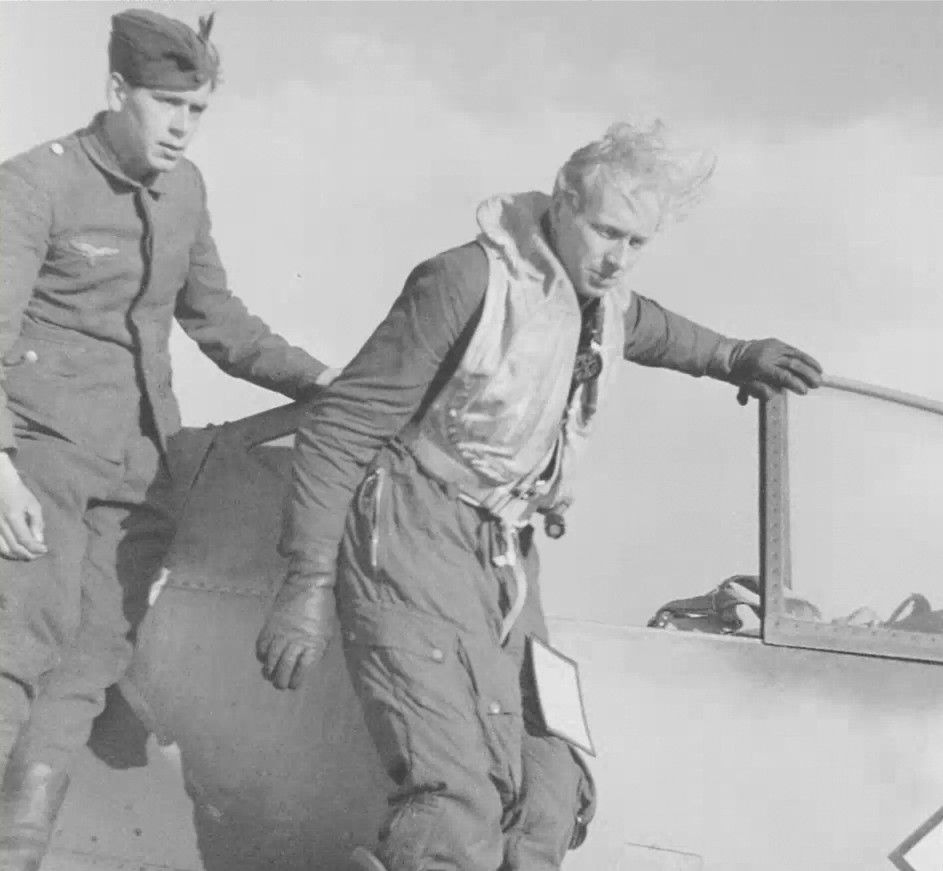
The second German attack formation did not fare much better. Following the Fw 190s of JG 2 into action, the pilots of I./JG 11 at least made it to their objective and managed to strike truck assemblies south of Liege, although they were immediately set upon by American P-47s. Such was the intensity of the ensuing dogfights that no German pilot was able to offer a detailed report on the results of the strafing attacks.
Although I./JG 11 did manage to attack its intended ground targets, the Gruppe also sustained losses, as both Fw. Kurt Wittek and Uffz. Otto Wernik were shot down. While the unfortunate Wittek was killed, Wernik was taken prisoner, survived the war, and passed away some 70 years later, in March 2015. Both pilots were from the 4. Staffel. The American pilots facing them were from the 389th FS/366th FG, who were returning home after an uneventful sweep when they were bounced by an estimated fifteen Fw 190s. In a dogfight north of Liege, Lts. Robert L. Blaker and Herbert H. Ulbricht each shot down an Fw 190, while Major Edward B. Guthmann probably destroyed another Fw 190. Lt. Richard Tanselle was in the process of attacking an Fw 190 when the approach of two German fighters caused him to break off and call for help. Major Guthmann, finishing his attack on the Fw 190 he claimed as a probable, then turned and helped Tanselle, who escaped unscathed. Such was the confusion caused by the combat that many German aircraft landed away from their home bases, and at 21:45, reports from fourteen German pilots were still recorded as outstanding.
Summarising the day’s activities, II. Jagdkorps reported:
“In the evening two formations totalling 64 aircraft took off on ground support operations in the Huy-Liege area. The first formation was attacked by Thunderbolts and did not reach the target area. The second formation carried out low-level attacks on transport concentrations south of Liege, setting fire to several vehicles. Further effects could not be observed owing to dogfights with numerically superior Thunderbolt formations. Four enemy aircraft were shot down. One FW 190 overturned on landing and was destroyed; the pilot was killed.”
Other than the army support operation, there were two II. Jagdkorps weather reconnaissance missions to the Huy-Liege area during the morning, each by a Rotte of JG 2, which apparently did not meet any enemy opposition. This took the II. Jagdkorps sortie tally to a mere 68 for the day.
Conclusion
Although it was a ‘quiet’ day for II. Jagdkorps, it still resulted in the death of seven pilots, with two others wounded and another taken prisoner. No fighter command could afford too many of these kinds of ‘quiet days’, particularly when there was no chance that the losses would be replaced by adequately trained fledgling pilots. One of the victories claimed was the 2.000th success of II. Jagdkorps since its establishment, but 9 September 1944 was yet another costly reminder that the Luftwaffe had lost control of the skies over Western Europe.
Primary Sources
AWM 54 423/4/103 Part 118, Luftflotte 3 KTB September 1944
BA-MA PERS 1/30112, Hohagen, Erich
DHH T-2417, Luftflotte 3 KTB September 1944
NA HW 5, Government Code and Cypher School: German Section: Reports of German Army and Air Force High Grade Machine Decrypts, 1940 – 1945
NA HW 13/88, GAF Fighter Activity on the Western Front, 29 August-13 December 1944
KTB Seekriegsleitung
Luftwaffe Victory Claims Material
Summarische Verluste – Flugzeuge
Secondary Sources
Blumenson, Martin United States Army in World War II, European Theater of Operations: Breakout and Pursuit, Center of Military History, Washington, DC, 1961.
Caldwell, Donald The JG 26 War Diary, Vol. 2, Grubb Street, London, 1998.
MacDonald, Charles B. United States Army in World War II, European Theater of Operations: The Siegfried Line Campaign, Office of the Chief of Military History, Washington, DC, 1963.
Mombeek, Eric Am Himmel Frankreichs: Die Geschichte des JG 2 “Richthofen”, Band 7: 1944-1945, A.S.B.L. La Porte d’Hoves, Linkebeek, 2024.
Olynyk, Frank J. Victory List No. 5, USAAF (European Theater) Credits for the Destruction of Enemy Aircraft in Air-to-Air Combat World War 2, self-published, Aurora, 1987.
Prien, Jochen & Rodeike, Peter Einsatz in der Reichsverteidigung von 1939 bis 1945, Jagdgeschwader 1 und 11, Teil 3: 1944-1945, Struve Druck, Eutin, 1995.
Rohwer, Jürgen Chronology of the War at Sea, 1939 – 1945, Naval Institute Press, Annapolis, 2005.
Wozer, John T. (ed.) The War We Fought, Fine Books Publishing Company, St. Augustine, 2007.
Electronic Sources
‘Aircrew Remembered’, https://aircrewremembered.com
‘LEIDY, Robert Mason’, https://www.fieldsofhonor-database.com/case/6553-leidy-robert-mason
‘Uboat.net’, https://uboat.net
Acknowledgments
Andreas Brekken, Russell Guest, Eric Mombeek, Kirk Ulbricht, Wernik family


